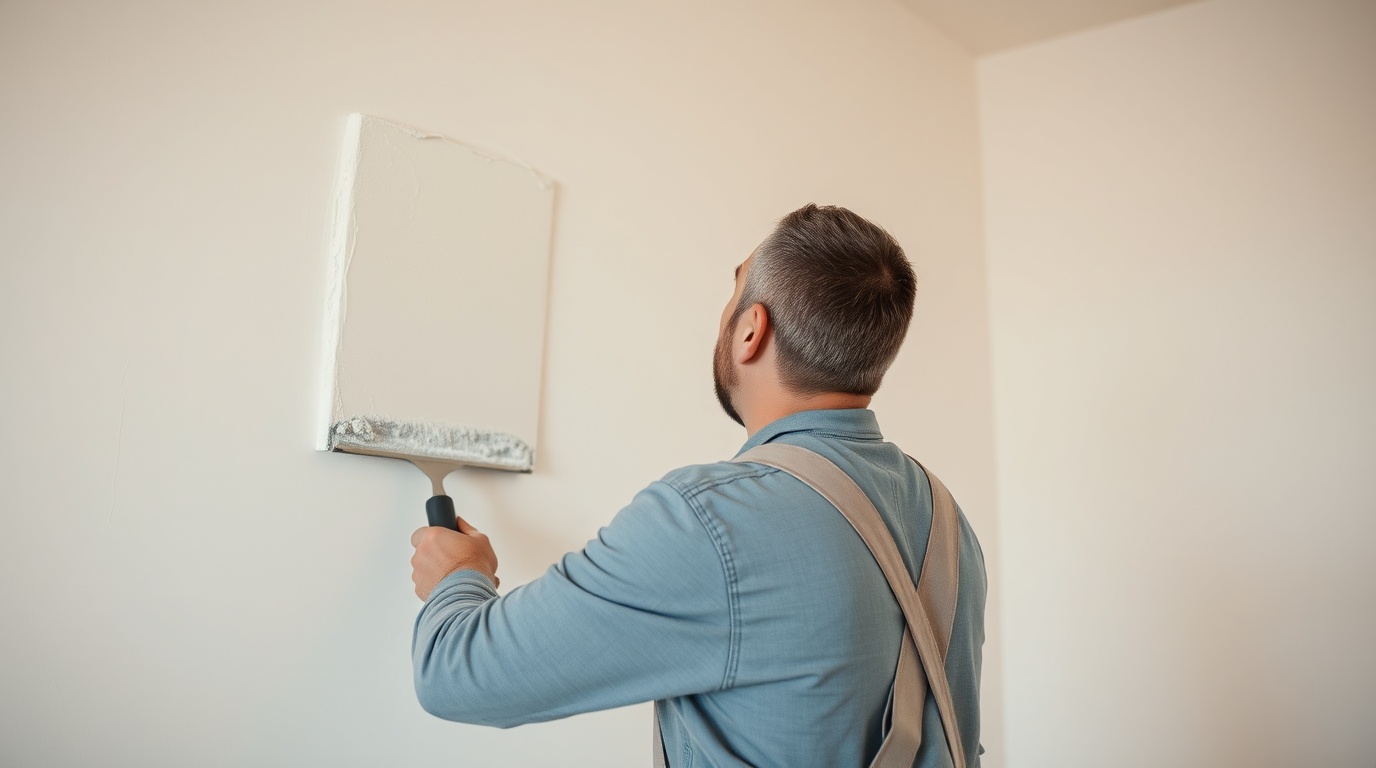
The short answer
A mist coat is the first coat of paint applied to new plaster: ordinary matt emulsion thinned with water, commonly around 3 to 4 parts paint to 1 part water. Fresh plaster is very porous, so a watered-down coat soaks into the surface and seals it, giving the following full-strength coats something to grip. Without a mist coat, normal paint applied straight onto new plaster is drawn in unevenly, dries patchy, and can flake or peel away. The mist coat must be a plain matt emulsion — not a vinyl, silk or one-coat paint, which form a film that struggles to bond with fresh plaster. The plaster must also be fully dry (a uniform pale colour) before the mist coat goes on.
The mist coat is the single most important step in painting new plaster, and the one most often skipped. Understanding what it does — and how to mix it — is what stops paint peeling off a perfectly good plastered wall.
Mist coat on new plaster
- What it isThinned first coat of emulsion
- Typical mixAround 3–4 parts paint to 1 water
- Paint typePlain matt emulsion only
- AvoidVinyl, silk, one-coat paints
- Apply whenPlaster is fully dry / uniform pale
Why new plaster needs a mist coat
New plaster behaves very differently from an already-painted wall, and the mist coat exists to handle that difference:
- Plaster is highly porous: dry fresh plaster is extremely absorbent. Apply a normal, full-strength coat of paint and the surface drinks the water and binders out of it unevenly. The paint dries thin and patchy in places, and bonds poorly.
- A thinned coat soaks in and seals: a watered-down mist coat is fluid enough to penetrate the surface rather than sit on top. As it dries it seals the pores and creates a stable, even base.
- It gives later coats a key: once the plaster is sealed, normal full-strength coats can bond to a consistent surface and build an even colour and finish.
Skipping the mist coat is the usual reason paint peels off new plaster — sometimes coming away in sheets when it dries or when tape is later removed. The plastering can be perfect, but without a mist coat the paint has nothing reliable to hold onto.
How to mix and apply it
A mist coat is simple, but the details matter:
- Use a plain matt emulsion. A basic, non-vinyl matt emulsion is ideal. Avoid vinyl matt, silk, and 'one-coat' or 'kitchen and bathroom' paints, which form a film that can struggle to bond with fresh plaster and may peel.
- Thin it with water. A common ratio is around 3 to 4 parts paint to 1 part water, but check the paint tin — some manufacturers recommend a specific dilution for new plaster. The aim is a thin, milky consistency that soaks in.
- Stir thoroughly so the water is fully mixed through.
- Apply evenly with a roller or brush. Expect it to look thin, streaky and patchy — that is normal for a mist coat and does not indicate a problem.
- Let it dry fully, then apply your top coats. Two normal coats of your chosen emulsion over a dry mist coat typically give an even, durable finish.
It is messier than normal painting because the thinned paint splatters, so protect floors and surrounding surfaces well. The effort is worth it: the mist coat is what turns a thirsty, porous wall into a sound base for paint.
| Step | What to do |
|---|---|
| 1. Confirm dry | Plaster uniform pale colour all over |
| 2. Choose paint | Plain matt emulsion (not vinyl/silk) |
| 3. Thin | Around 3–4 parts paint to 1 part water |
| 4. Apply | Even coat; expect a patchy look |
| 5. Top coats | Two normal coats once mist coat is dry |
General method for guidance only; follow the paint manufacturer's dilution advice for new plaster.
Common mist-coat mistakes
Most new-plaster paint failures come down to a handful of avoidable errors:
- Painting too soon: applying a mist coat before the plaster is fully dry traps moisture and causes the paint to bubble and peel. Wait for the uniform pale colour, including the slow-drying corners and edges.
- Using the wrong paint: a vinyl, silk or one-coat paint as the first coat is a frequent cause of peeling. The mist coat needs to be a plain matt emulsion that can soak in.
- Not thinning enough: a barely-thinned coat behaves like normal paint and sits on the surface rather than penetrating. Thin it properly to a milky consistency.
- Over-thinning: too much water makes a very weak coat that barely covers; aim for the typical ratio rather than going far beyond it.
- Skipping it altogether: going straight to full-strength paint on new plaster is the most common mistake of all, and the one most likely to cause flaking later.
Get the timing and the mix right and the rest of the decorating behaves normally. The mist coat is a small extra step that protects all the work that went into the plastering.
A common question is whether a dedicated 'new plaster' primer or sealer can be used instead of a thinned-emulsion mist coat. Some manufacturers sell drywall or plaster sealers designed for the job, and these are a valid alternative — they seal the porous surface in a single product without mixing. The traditional thinned-emulsion mist coat remains popular because it is cheap, uses the same paint as your top coats, and works reliably. Whichever you choose, the principle is identical: seal the absorbent fresh plaster first so the full-strength coats bond to a stable surface rather than being drawn into a thirsty wall.
It is also worth being prepared for how a mist coat behaves practically. Because the paint is thinned, it is runnier than normal emulsion and tends to splatter off the roller, so floors, skirting and nearby surfaces need good protection. Work in manageable sections, keep a wet edge, and do not worry that the coverage looks thin and uneven — that is the nature of a mist coat soaking in. Once it has dried fully, the surface is sealed and your normal two top coats will go on evenly and build the colour. Skipping or skimping on this first sealing coat is the single biggest reason a freshly plastered, freshly painted wall ends up peeling, so it is the one step not to cut.
Frequently asked questions
What ratio should I mix a mist coat?
A common starting point is around 3 to 4 parts paint to 1 part water, giving a thin, milky consistency that soaks into the porous plaster. Check the paint tin first, though, as some manufacturers recommend a specific dilution for new plaster. The goal is a coat fluid enough to penetrate and seal the surface rather than sit on top of it.
Can I use any paint for a mist coat?
No — use a plain matt emulsion. Avoid vinyl matt, silk, 'one-coat' and 'kitchen and bathroom' paints as the first coat, because they form a film that can struggle to bond with fresh plaster and may peel. A basic non-vinyl matt emulsion thinned with water is what soaks in and seals the surface, creating a sound base for your normal top coats.
Do I have to wait for plaster to dry before the mist coat?
Yes. The plaster must be fully dry — shown by a uniform pale colour across the whole surface, including the slow-drying corners and edges — before the mist coat goes on. Applying a mist coat to damp plaster traps moisture and causes the paint to bubble and peel, so the drying time comes first and the mist coat follows once the wall has gone evenly pale.
Sources & further reading
Figures on this page are typical UK ranges drawn from published sources and depend on your specific room. They are guidance, not a quotation.