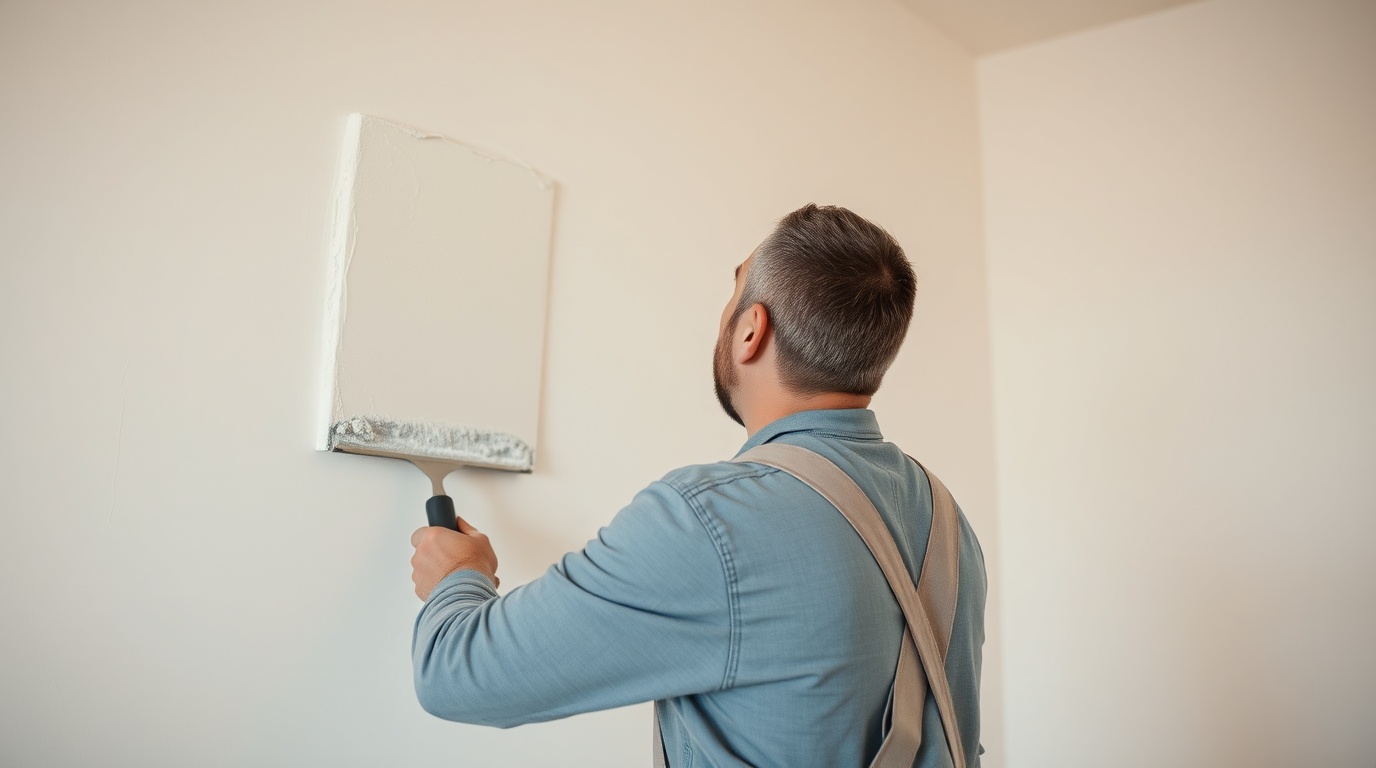
The short answer
How many coats of plaster you need depends on the surface. Skimming a sound, flat wall — existing plaster or fresh plasterboard — usually needs just one finish coat of multi-finish, applied in two passes to a total of around 2–3mm and trowelled flat. Re-plastering bare brick, block or a stripped wall needs two coats: a thicker backing (float) coat of hardwall or bonding to build out and flatten the surface, followed by a finish coat of multi-finish on top once it has firmed up. So 'how many coats' is really 'skim or float and set'. Very uneven walls may need an extra build-up ('dubbing out') in low areas before the backing coat, but the standard answer is one coat for a skim and two for a full re-plaster.
People often picture plaster as a single layer, but the number of coats is what separates a quick refresh from rebuilding a wall. The surface underneath decides which you need.
Coats of plaster
- Skim a sound wallOne finish coat (2 passes)
- Re-plaster bare wallBacking coat + finish coat
- Skim coat thicknessAbout 2–3mm total
- Backing coatThicker, builds out the wall
- Very uneven wallsMay need dubbing out first
Skimming: one finish coat
Where a wall or ceiling is already sound and reasonably flat, it needs only a skim — a single finish coat:
- One coat, two passes: multi-finish plaster is applied in two passes that together make up a thin finish layer of around 2–3mm. The first pass is laid on and ruled flat; a second, thinner pass fills and levels before the surface is trowelled up. Though it is two passes of the trowel, it is considered one coat — the finish coat.
- Suitable surfaces: existing sound plaster being refreshed, and fresh plasterboard. Both have suction suited to taking a skim directly (board usually without PVA, old plaster often with suction control).
- What it cannot do: a thin skim follows the shape of the wall beneath. It cannot flatten a badly uneven, blown or wavy wall — for that you need a backing coat to build out the surface first.
Skimming is the most common plastering job in UK homes precisely because most walls in habitable rooms are sound and just need their surface renewed. One coat does the job.
Re-plastering: backing coat plus finish
Where a wall is bare brick or block, has been stripped back, or is too uneven for a skim, it needs a full float and set — two coats:
- Backing (floating) coat: applied first and more thickly to build out and flatten the wall. On masonry this is usually hardwall; on low-suction or mixed backgrounds, or where a bonding plaster suits, bonding is used. The backing coat is ruled flat and then 'keyed' (scratched) so the finish coat will grip. It is left to firm up before the next coat.
- Finish coat: a thin coat of multi-finish, like a skim, applied over the firmed backing coat and trowelled to a smooth, paint-ready surface.
This two-coat system is what gives a flat, sound wall over an uneven or bare background. The backing coat does the building-out and the finish coat does the smoothing. Because there are two coats, plus drying between them, re-plastering takes roughly twice the time and materials of a skim — which is why it costs more.
| Surface | Coats needed | Materials |
|---|---|---|
| Sound plaster / plasterboard | One finish coat (skim) | Multi-finish |
| Bare brick or block | Backing + finish (float and set) | Hardwall + multi-finish |
| Low-suction / mixed background | Backing + finish | Bonding + multi-finish |
| Very uneven wall | Dub out + backing + finish | Build-up + backing + finish |
General guidance only; the plasterer selects materials to suit the background and its suction.
When extra build-up is needed
Occasionally a wall needs more than the standard one or two coats, and it is worth knowing why:
- Dubbing out: where a wall has deep hollows or is very uneven, the plasterer first fills the low areas with plaster ('dubbing out') and lets it set, so the backing coat can then be applied to a more even base. This is an extra build-up stage rather than an extra full coat.
- Thick backing builds: very uneven masonry may need the backing coat built up in more than one layer, because applying too much plaster in one go can cause it to slump or crack. Building it up in passes keeps it sound.
- Renovating plasters for damp: on walls treated for damp, a specialist backing plaster may be used as part of the system before the finish coat, following the damp-proofing specification.
For the vast majority of jobs, though, the answer is straightforward: one coat to skim a sound wall, and two coats — a backing coat and a finish coat — to re-plaster a bare or uneven one. The plasterer chooses the system after looking at the surface, its suction and how flat it is, which is why a proper assessment of the wall is the starting point for any plastering job.
It is worth noting why a backing coat cannot simply be applied as thickly as needed in one go. Plaster has a sensible maximum thickness per coat — apply too much at once and it can slump under its own weight while wet, or crack and lose its bond as it dries. That is why a very uneven or deeply hollow wall is built up in stages: dubbing out the worst hollows first, letting that set, then applying the backing coat to a more even base, and only then the finish. Each stage is allowed to firm before the next, which is part of why a full re-plaster of a difficult wall takes longer than the simple 'two coats' description suggests.
The finish coat, by contrast, is always thin regardless of the background, because its only job is to provide a smooth, flat, paint-ready surface — not to build out the wall. This division of labour between the coats is the logic behind the whole system: the backing coat handles flatness and suction control, and the finish coat handles smoothness. Understanding that helps when reading a quote, because it explains why the plasterer specifies particular materials for particular walls — hardwall or bonding for the backing depending on the surface, multi-finish for the skim — rather than using a single product everywhere.
Frequently asked questions
Is one coat of plaster enough?
For skimming a sound, flat wall — existing plaster or fresh plasterboard — yes, one finish coat of multi-finish (applied in two passes to around 2–3mm) is enough. One coat is not enough for bare brick, block or a badly uneven wall, which need a thicker backing coat to build out and flatten the surface before the finish coat goes on top.
What is the difference between a backing coat and a finish coat?
The backing or 'floating' coat goes on first and more thickly, building out and flattening the wall — usually hardwall on masonry or bonding on low-suction surfaces — and is keyed so the next coat grips. The finish coat is a thin layer of multi-finish applied over the firmed backing coat and trowelled smooth and flat, ready for decorating. Together they make a 'float and set'.
How thick is a skim coat?
A skim coat is thin — typically around 2 to 3mm in total, applied in two passes of the trowel. It is a finishing layer designed to give a smooth, flat, paint-ready surface over a wall that is already sound, not to build out or straighten an uneven wall. Building out a wall requires the thicker backing coat used in a full re-plaster.
Sources & further reading
Figures on this page are typical UK ranges drawn from published sources and depend on your specific room. They are guidance, not a quotation.